What was once promoted as a landmark step toward Australia’s renewable energy future has instead become one of the country’s most divisive infrastructure battles.
A project designed to strengthen the national electricity grid is now triggering protests, legal disputes, and growing anger across rural Victoria.
At the center of the controversy is the VNI West transmission project, a massive high-voltage electricity corridor intended to connect Victoria and New South Wales.
The transmission line is considered a crucial part of Australia’s transition away from coal-fired power and toward renewable energy sources.
Government planners argue that the project is essential for carrying electricity generated by solar and wind farms across state borders and stabilizing the national energy grid.
Officials say the infrastructure is needed urgently as aging coal-fired power stations move toward closure over the coming decade.
On paper, the project represents a cornerstone of Australia’s broader climate and energy strategy.

In practice, however, the proposed route cuts directly through approximately 240 kilometres of highly productive agricultural land in north-central Victoria.
For many farming families, the issue is not opposition to renewable energy itself, but concern over how the project is being imposed on rural communities.
Landholders say the transmission corridor threatens to disrupt farming operations that have existed across multiple generations.
Some grain farmers have warned that the planned 70-metre-wide easement could effectively divide their properties in half.
Modern farming machinery often relies on uninterrupted access across large areas of land, and farmers fear the transmission towers will complicate harvesting, planting, and transport logistics.
Several residents have also raised concerns that the project could reduce long-term land productivity and lower property values.
Tensions escalated significantly after government agencies issued formal notices allowing officials to enter private land for environmental and engineering surveys.
In some cases, these notices were delivered even when landholders had refused to provide voluntary consent.
The situation became even more controversial after farmers were warned they could face fines exceeding $6,000 if they attempted to block survey crews from accessing their land.
That detail sparked widespread outrage across affected communities.
Many rural residents argue that the notices represent a direct erosion of property rights and an example of governments placing national policy goals above local interests.
Community meetings across the region have become increasingly heated as frustration continues to grow.
Some farmers have described the situation as one of the most serious challenges rural landowners have faced in decades.
Others say they feel ignored by policymakers who rarely experience the direct consequences of infrastructure decisions made in major cities.
Authorities, however, insist the process is necessary to ensure critical energy infrastructure can be developed within required timelines.
Government agencies argue that without major transmission upgrades, Australia risks falling behind on its renewable energy transition and could face future electricity reliability problems.
VicGrid, the Victorian agency responsible for overseeing the project, says it has attempted to prioritize consultation and voluntary agreements wherever possible.
Officials state that hundreds of meetings, information sessions, and discussions with landholders have taken place over the past year and a half.
Despite these efforts, many residents argue that consultation has not translated into genuine influence over final planning decisions.
Critics claim the process feels more like notification than meaningful negotiation.

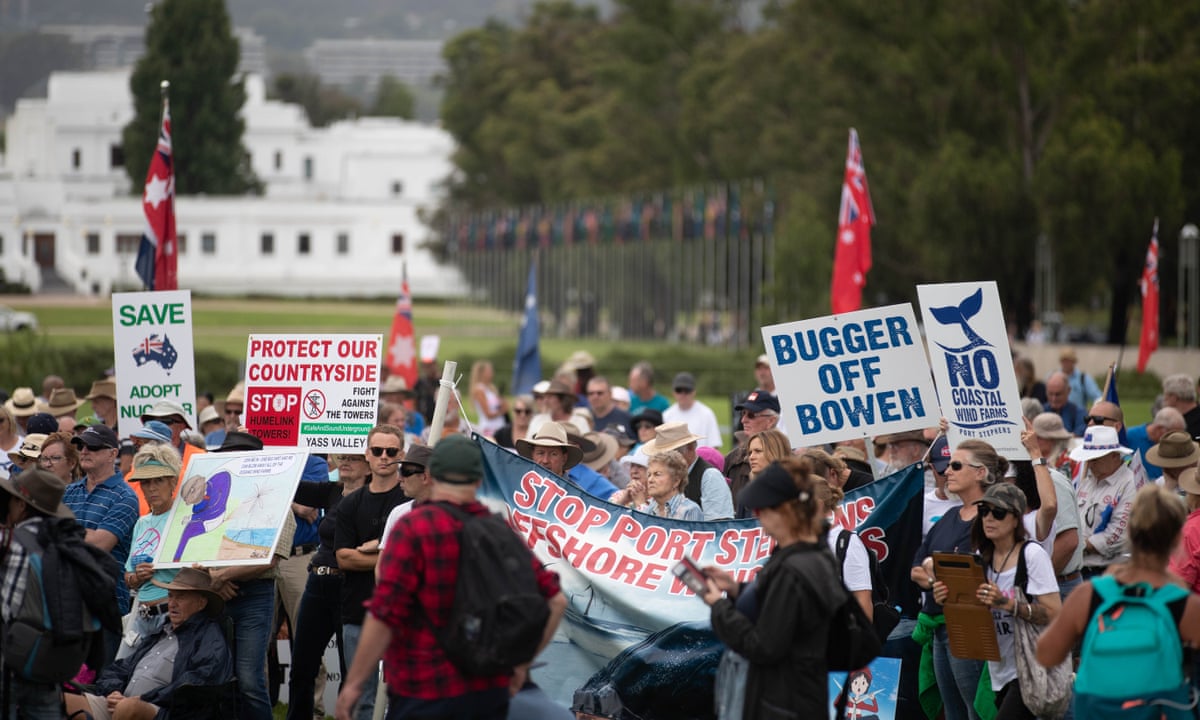
As tensions increase, organized protests have already begun appearing throughout affected parts of Victoria.
Community groups are warning that resistance could intensify if land access continues without landholder consent.
Some residents have discussed coordinated legal action, while others are preparing public demonstrations aimed at drawing national attention to the issue.
The dispute highlights a growing challenge facing governments around the world as countries pursue ambitious climate and renewable energy targets.
Large-scale energy transitions often require equally large-scale infrastructure development, including transmission lines, substations, and renewable energy zones.
While such projects may serve national interests, the physical burden is frequently concentrated in specific rural communities.
Energy experts acknowledge that Australia faces real pressure to modernize its electricity network quickly.
The planned closure of coal-fired power stations, including the Yallourn plant scheduled to shut down in 2028, has intensified urgency around renewable energy expansion.
Without sufficient transmission infrastructure, renewable energy projects could struggle to deliver electricity efficiently into the national grid.
This could create risks for energy reliability, electricity pricing, and long-term economic planning.
However, critics argue that governments have underestimated the social and economic consequences for regional communities expected to host the infrastructure.
Some academics and policy experts have suggested alternative approaches to reduce the impact on farmland.
These proposals include upgrading existing transmission corridors, reconsidering routes, or investing in decentralized energy systems that require less large-scale infrastructure.
Others believe compensation frameworks for affected landholders should be significantly expanded.
The controversy has also become politically sensitive because rural communities represent an influential voting bloc within Australian politics.
Historically, regional voters have played an important role in shaping debates around agriculture, mining, water rights, and energy policy.
As anger grows across farming regions, political parties are increasingly aware that the backlash could carry electoral consequences.
Opposition politicians have already begun criticizing aspects of the project, arguing that the government has failed to maintain community trust.
Meanwhile, environmental advocates continue emphasizing the urgency of reducing Australia’s dependence on fossil fuels.
Supporters of the project argue that delaying transmission infrastructure could slow the country’s progress toward climate goals and prolong reliance on coal-powered electricity.
For many residents in north-central Victoria, however, the debate has evolved far beyond technical energy policy.

The conflict has become symbolic of a larger struggle over fairness, local representation, and the balance between national priorities and individual rights.
Farmers insist they are not opposed to sustainable development or renewable energy in principle.
Instead, they argue they should have greater input into decisions that permanently reshape their land, businesses, and livelihoods.
Government officials maintain that the renewable energy transition is unavoidable and that major infrastructure projects are necessary to secure Australia’s long-term energy future.
Still, the increasingly confrontational atmosphere suggests compromise may become more difficult as both sides harden their positions.
With additional survey work planned and more properties expected to receive access notices, tensions remain extremely high across affected regions.
What began as a technical infrastructure initiative has now become a national debate about consent, property rights, rural identity, and the true cost of transitioning to a low-carbon economy.
As Australia pushes forward with its renewable energy ambitions, the battle unfolding in Victoria may ultimately shape how future infrastructure projects are negotiated across the country.