Long before Richard Wilkins became one of Australian television’s most familiar faces, he was an 18-year-old father confronting circumstances he could never have anticipated. His later reflections on his eldest son, Adam, reveal the fear behind one life-changing decision — and the promise Richard says never left him.
A chapter that began long before television
For millions of Australians, Richard Wilkins is the polished entertainment presenter who has spent decades interviewing stars, reporting from red carpets and appearing on some of the country’s best-known television programs.
Yet one of the most important chapters of his life began well before the cameras and celebrity interviews.
Richard was just 18 when he became a father for the first time in New Zealand. His eldest son, Adam, was born with Down syndrome, placing the young parents in circumstances for which neither felt prepared.
It was an experience that would shape Richard’s understanding of love, responsibility and fatherhood long after his public career began.
Becoming a father while still a teenager

Richard has spoken candidly about how young he was when Adam arrived. At an age when most teenagers are only beginning to imagine their adult lives, he was suddenly trying to make decisions about a child who would need significant, long-term support.
The uncertainty was made heavier by the attitudes and limited support surrounding disability at the time. Richard recalled being presented with advice that suggested Adam could be placed into care and left behind emotionally.
For the young father, however, accepting practical help did not mean accepting that his relationship with his son should disappear.
The decision that changed their daily lives
Richard and Adam’s mother initially attempted to care for their son themselves. Eventually, they faced the deeply difficult conclusion that specialised care could provide the level of support he needed.
It was not a simple choice, nor one Richard has ever described casually. Placing Adam into care changed the shape of their family life, but Richard has made clear that it did not end his role as a father.
Looking back during an emotional television conversation, he remembered rejecting the suggestion that he should simply move on.
“No, he is always going to be my son,” Richard said.
Those words reveal the distinction at the heart of his story: the circumstances of Adam’s care changed, but the relationship itself remained.
A bond maintained beyond one painful moment
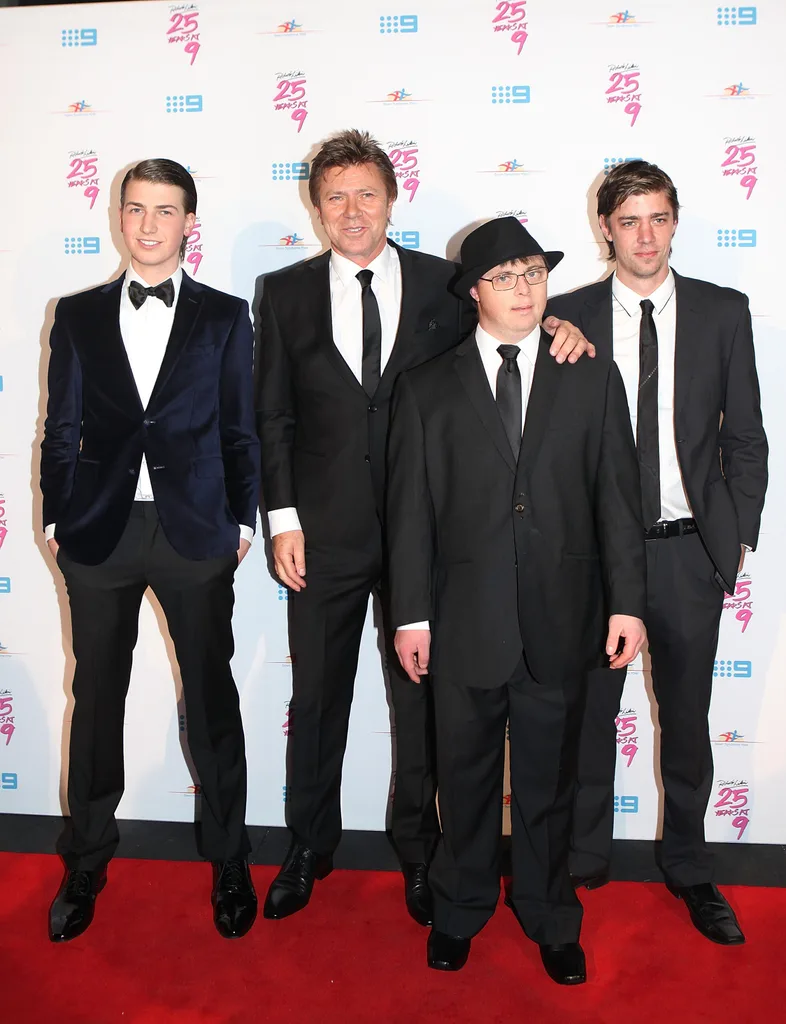
The decision made when Richard was young could easily have become the only detail remembered about this chapter. His later reflections, however, tell a broader story.
Richard continued to regard Adam as an enduring part of his life and family. Rather than presenting the past as an easy lesson with a neat ending, he has acknowledged how confronting those early years were and how deeply the experience stayed with him.
That honesty gives his words their emotional weight. “He is always going to be my son” was not simply a response made in one difficult moment. It became a statement about a connection that survived changing homes, distance and the passing of time.
The private story behind a public figure
Richard would later build a long career in Australian media after moving from New Zealand. He became known for his entertainment reporting, major celebrity interviews and decades of work with the Nine Network.
The confidence viewers saw on screen offered little indication of the responsibility he had encountered so early in life.
His story with Adam therefore adds a very different dimension to the familiar television personality. Before the red carpets and high-profile interviews, Richard had already been forced to confront a question with no painless answer: how to do what appeared best for his son while holding onto their bond as father and child.
Why his words still carry such weight
Richard’s account belongs to a different period, when families raising children with disabilities often received far less practical assistance and were confronted by attitudes that could be deeply isolating.
Seen in that context, his reflection is not merely about one decision. It is also about a teenage father trying to navigate fear, limited options and advice that did not reflect what he felt for his child.
He could not control every part of the path ahead. But he could decide that Adam would never be erased from his life.
A promise that endured
Years later, Richard’s most powerful description of this chapter was also his simplest.
“He is always going to be my son.”
Behind that sentence was the uncertainty of becoming a father at 18, the pain of changing how his son would be cared for and the determination to preserve a relationship that mattered beyond any single decision.
For viewers accustomed to seeing Richard Wilkins as one of Australian television’s most composed personalities, the story offers a rare glimpse of the young man he was before fame — and of the promise he carried with him into every chapter that followed.
Sources: Richard Wilkins’ public reflections as reported by Mamamia; biographical background from Nine.