Helen Haines’ husband and the words that stopped us in our tracks
Earlier this week, an Australian farmer’s simple words of love and pain stopped us in our tracks.
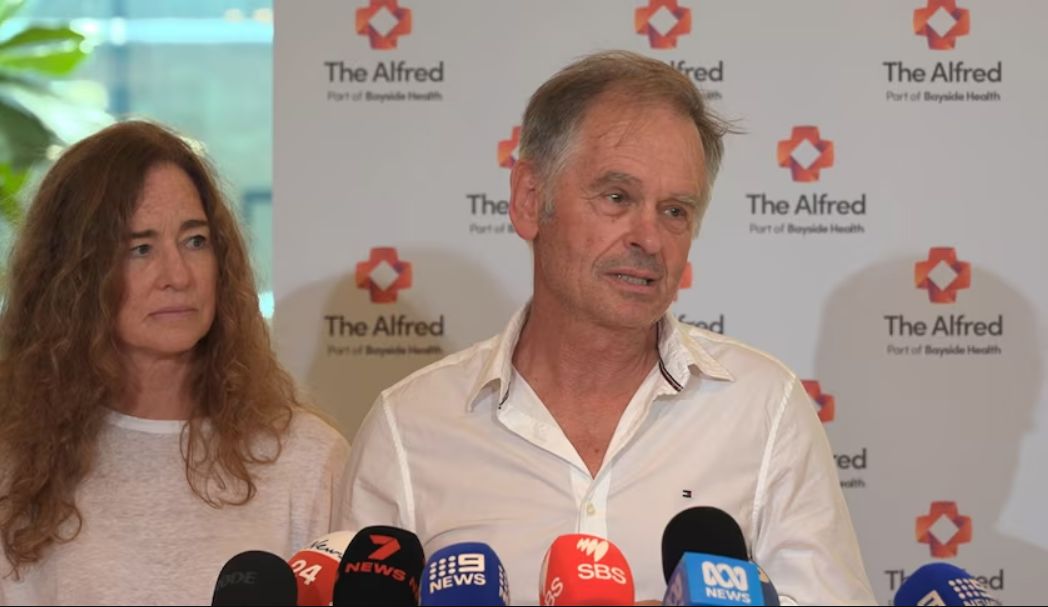
Phil Haines stood in the entrance of The Alfred Hospital in Melbourne and spoke about his wife.
This man has every right to be rippling with fury. He’s been married to the MP Helen Haines for almost 40 years, and on Monday, Helen was getting on with an ordinary afternoon when she was allegedly targeted in a violent attack.
Australians are familiar with the facts by now. We’ve been thinking about it ever since. A white Land Cruiser allegedly coming out of nowhere, pinning Helen to her car. Reversing, and hitting her again. A horrific, repeated action that, we now know, has cost Haines both her legs, put her life in grave danger, and completely changed her world.
We also know that the people on that Wangaratta street ran towards the unthinkable scene, and helped. Helped restrain the alleged attacker, helped summon health workers, helped save a life.
Helen Haines’ first words, after an act of violence so brutal, so ugly? Beauty. “Thank you, you lovely people.”
So Phil Haines could have stood in that hospital and raged.
He did not. He spoke of love, and family, and helpers. And what makes his wife Helen extraordinary.
“The good news in all this,” were the improbable words Phil came to, after confirming Helen’s second amputation, and talking about their children and grandchildren, and the joy they bring. “Is Helen is alive and she’s stable. That is the most important thing for our family.
“And when we reflect… the two most important parts of Helen for us as a family are her heart and her mind. Her heart is huge she’s a very compassionate, caring, loving person…
“And her mind. She has the sharpest intellect… We are grateful and thankful that at this stage, both her heart and her mind are in good shape.”
Phil Haines then asked that instead of flowers (which Helen loves, he says, especially dahlias), anyone who wanted to show support should donate to Save The Children, a cause his wife is passionate about. That’s what Helen wants, he said, and it would mean a lot to the family.
As Phil Haines showed so clearly, men are good and wise and true. Kind, appreciative partners. Doting fathers and grandads and brothers.
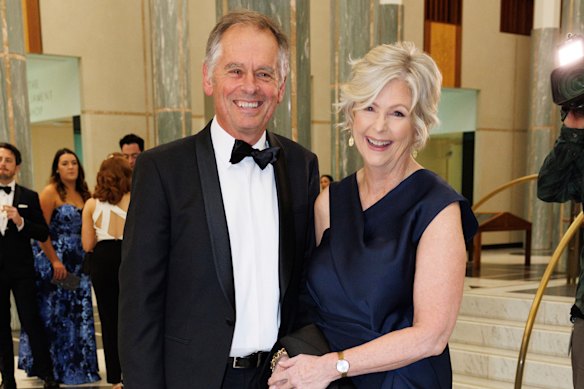
Men are loving and grateful and capable of enormous grace, strength and forgiveness.
And men are terrifying women out of public life.
What happened on Monday afternoon may turn out to have nothing to do with politics. The man charged with the alleged attack on Haines in Murphy Street is in custody. Stories and theories fly, his true motives are not clear.
But whether or not this was a political act of violence, the chilling effect on women in public life is undeniable.
The very next day, Melbourne Independent Monique Ryan had to report two people to police for “menacing” her office. This was not, she was clear, unusual.
On Wednesday, a man turned up to the office of MP Hannah Beazley, of Victoria Park in Perth, allegedly brandishing nunchucks, asking for her. He has been arrested and charged.
Our famously egalitarian Australian open doors, with electoral offices on small-town high streets and inside urban shopping centres, allow anyone to walk in. So do the ones in your workplace, most likely.
But women in the public eye are painfully aware of the possibility of violent intent from a man coming through or waiting outside those doors. Because they’re exposed to it every day.
Only a week before Helen Haines’ alleged attack, a group of female MPs used a standard meeting with a Meta executive to ask why they are constantly exposed to rape and death threats on the platforms they need to use for their jobs.
Politico reports that many of the women now use a third-party AI tool to filter the violence out, to assess if it came from a real person or a bot, to arrange it into categories of serious, important, actionable.
Why, they were asking if this is possible to do via a downloadable app, isn’t it possible for the Silicon Valley tech companies with bottomless budgets?
On Oct 13, the Labour MP Anne Aly posted to Instagram that she had received 19 death threats in the course of one ordinary seven-day period.
Allegra Spender, an independent MP in Sydney’s east, talked about the statistics behind the enormous rise in abuse in a column in the Sydney Morning Herald this week: “If you are in parliament, you feel it. You see the threats, the aggression particularly online. You try to ignore them.”
Bridget McKenzie, the leader of the Nationals in the Senate, told Today she is constantly exposed to violent threats, and has been told, on her Facebook page, that she is a “dead woman walking”.
Again, she said, “This is not unusual.”
The numbers of women in parliament have never been higher. The fight to get them there has been slow and painful.
The Australian public have made it clear that they want the government to represent their society, voting out parties who refused to select female members, putting their crosses beside women’s names in unprecedented numbers.
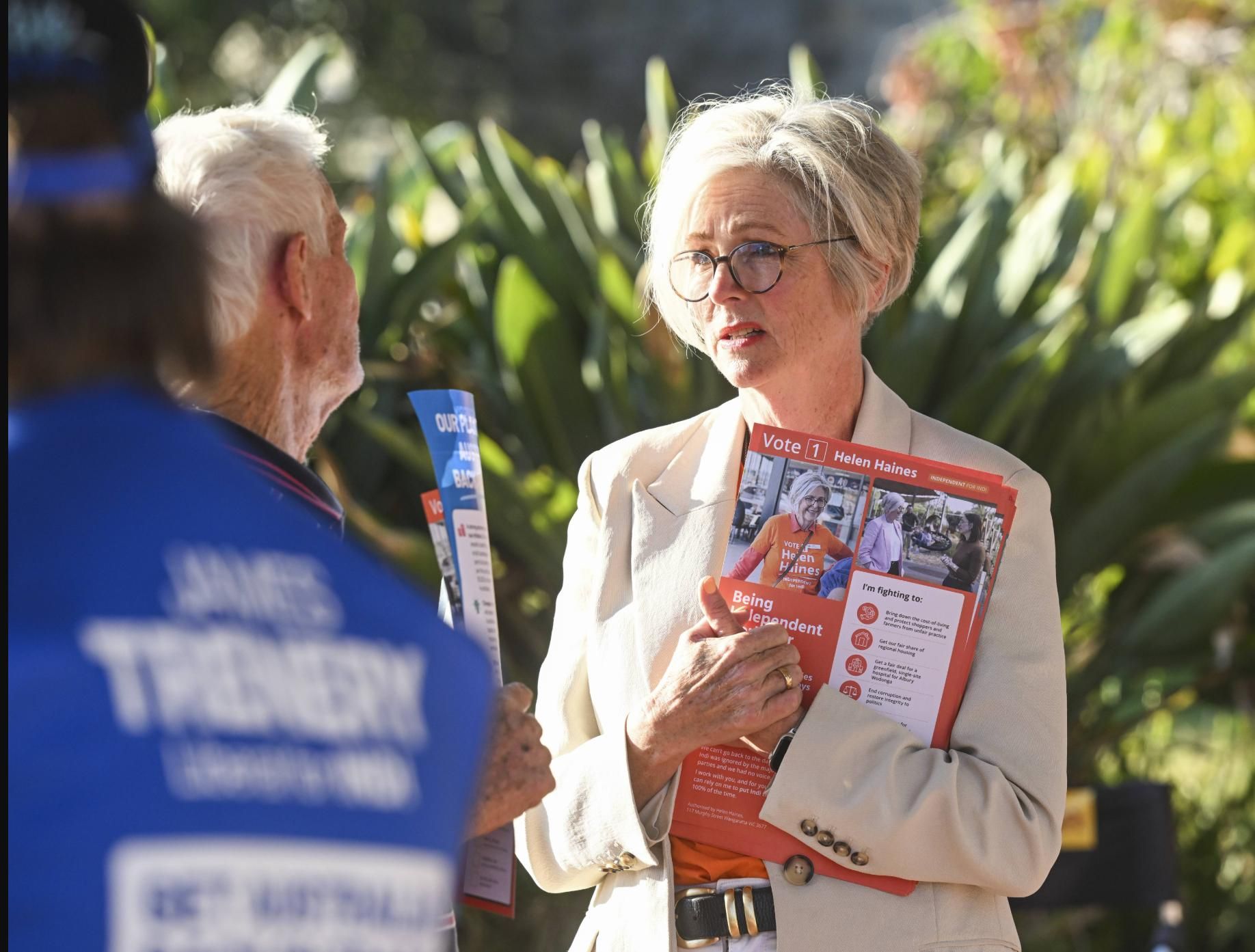
Women like Helen Haines, who’s been universally recognised this week as brave and fair, decent and empathetic. Committed to the public square as a place that can improve ordinary lives, get things done.
It wouldn’t be surprising, given the stories many of these women are telling, if this momentum of female involvement in politics comes to a screeching halt.
That the women who might choose to follow Haines’ path will take another, rather than subject themselves to constant, demoralising, frightening abuse.
Is this just the way it is now? Is there nothing to be done?
Perhaps part of the answer lies with the many, many men who have the decency and strength of a Phil Haines. Men who are not intimidated by women with a “sharp intellect”.
Could they drown out the ones who would rather not look at or listen to a woman in a position of power? Point out how strange that is? How weak that is?
We need those men to call out in huge numbers that it is far from “usual” to casually tell a woman you don’t agree with that you are going to kill her.
We need them to help us put pressure on tech platforms to use their infinite intelligence, human or otherwise, to stop normalising violent threats, wherever they come from.
To stop rewarding outrage as engagement and find a new metric.
It’s very likely, of course, that none of this would have had any impact at all on what happened in Wangaratta on Monday.
But it might just mean the women following Helen Haines’ example of dedicating themselves to public service won’t have to wonder — hourly, daily — if that is a decision that might cost them everything.